Public voting is currently closed.
Overview
Project Details
Category
Customer
Submitted by
Timeframe
Tech Stack
Services
Demo Link
Team
Link to case study
Description
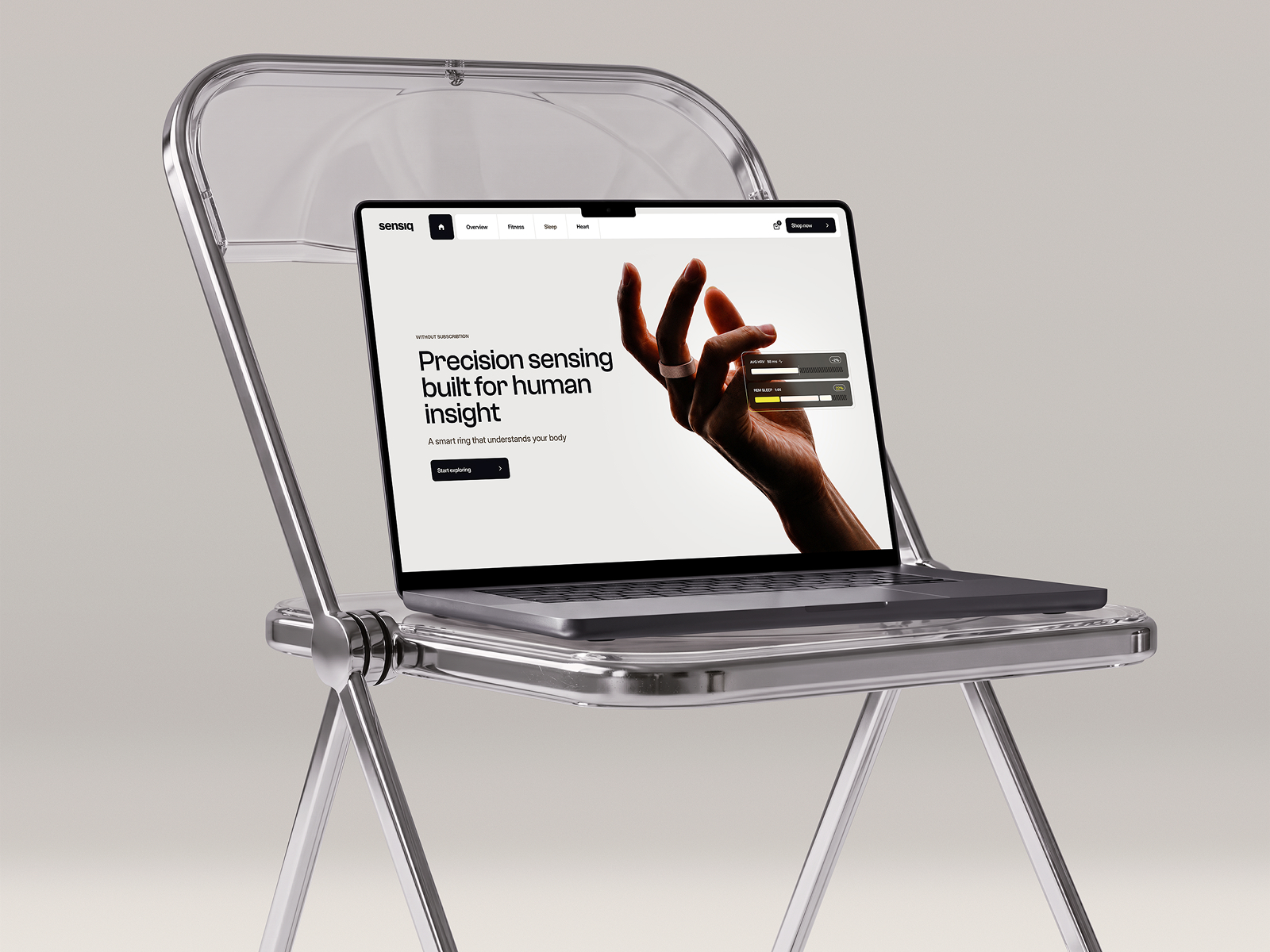
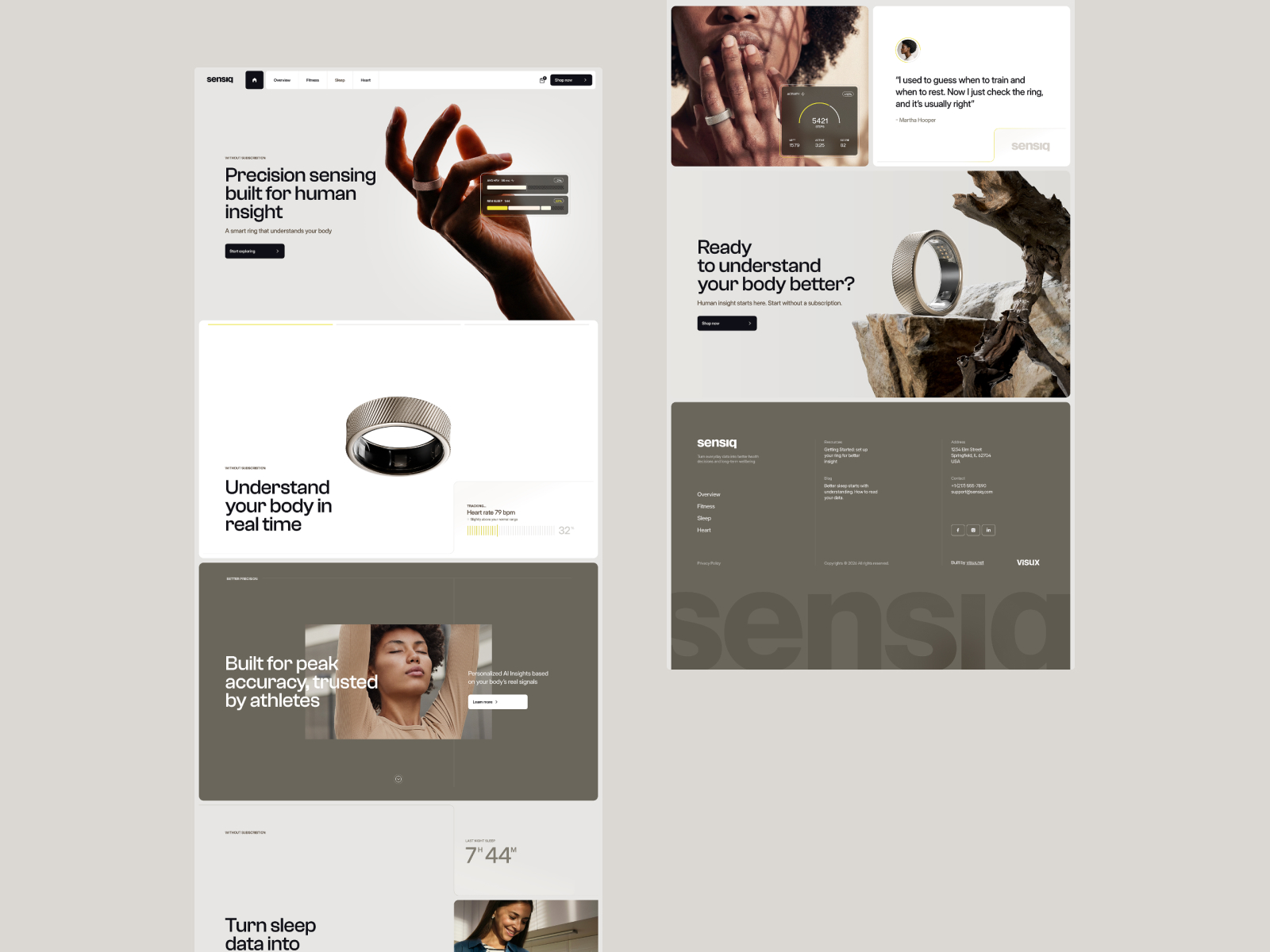
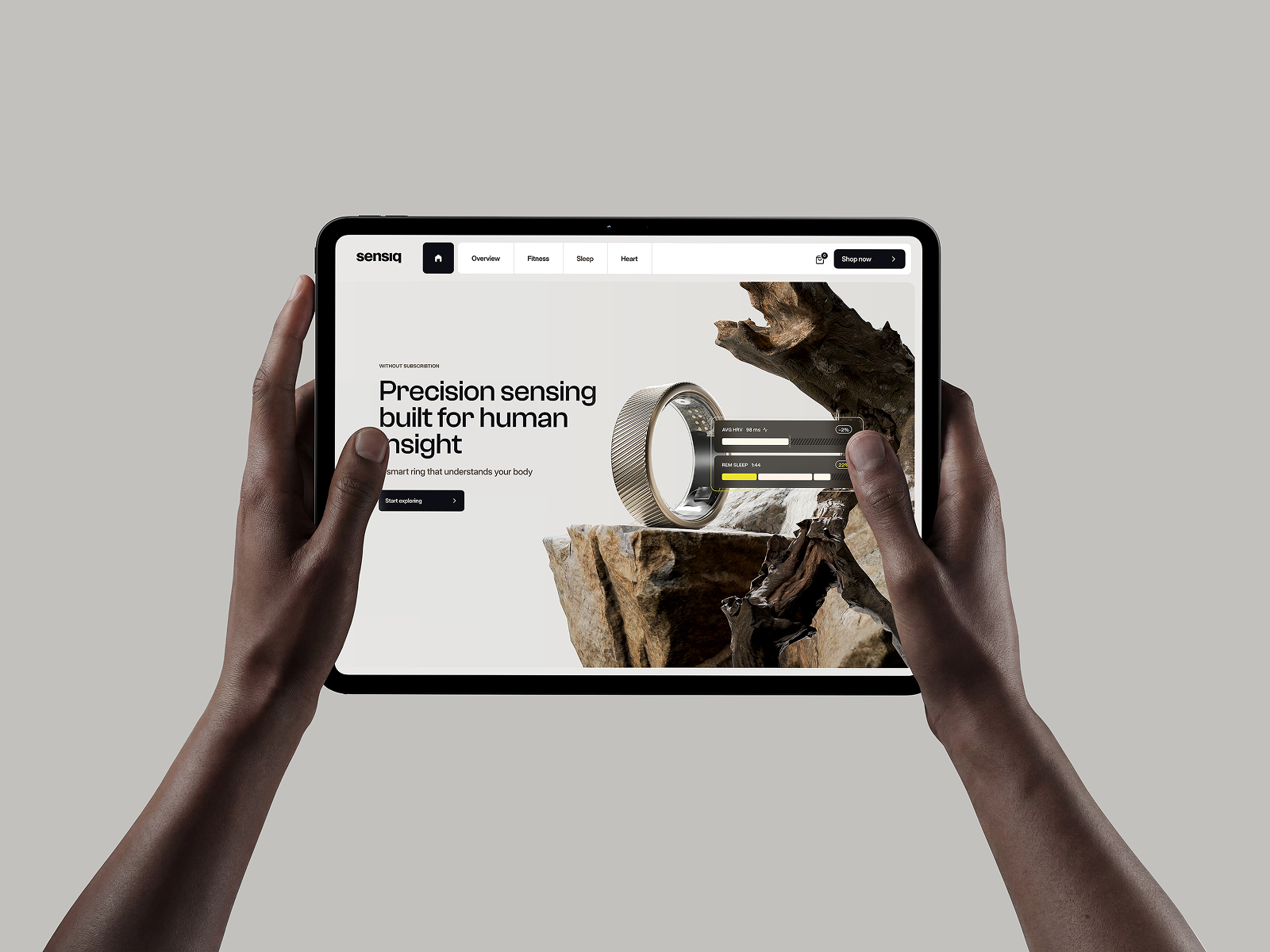
Sensiq is a smart ring that turns biometric data into insights people can actually use. We created the brand and website from scratch, partly as an internal HealthTech concept, partly to test a new way of building websites on a project where we controlled everything.
The problem we picked is one you see across health wearables. The hardware keeps improving, but the software around it stays clinical and cold. You get charts and scores where you wanted an answer to a simple question: am I okay, and what should I do differently? We wanted the Sensiq experience to feel like it was made for a person, not a patient, and to look expensive without hiding behind complexity.
The process was standard for us at the start: discovery workshops, competitor analysis, then brand work, moodboards, logo, UI exploration, and a design system to hold it all together. The site itself leans on storytelling and heavy GSAP animation, and it stays fast despite that.
The unusual part is the build. We made the entire site in Ploy, working alongside an AI agent that writes production Astro code and takes over the repetitive implementation work. Ploy sits on top of Astro, React, TypeScript, and Tailwind, so the output is a normal codebase we can version, review, and extend, not a black box. In practice this changed the rhythm of the project more than anything else. An idea could be on a staging URL in minutes. Design tweaks stopped being tickets. Deployment was just part of the same loop. Start to launch took two months, with three people.
We came out of it convinced that this way of working isn't a compromise. The developer time we saved went into design, content, and interactions, which is where it should go. And the site didn't freeze at launch. We still add pages, adjust content, and improve SEO by describing the change in plain language instead of opening a dev cycle.