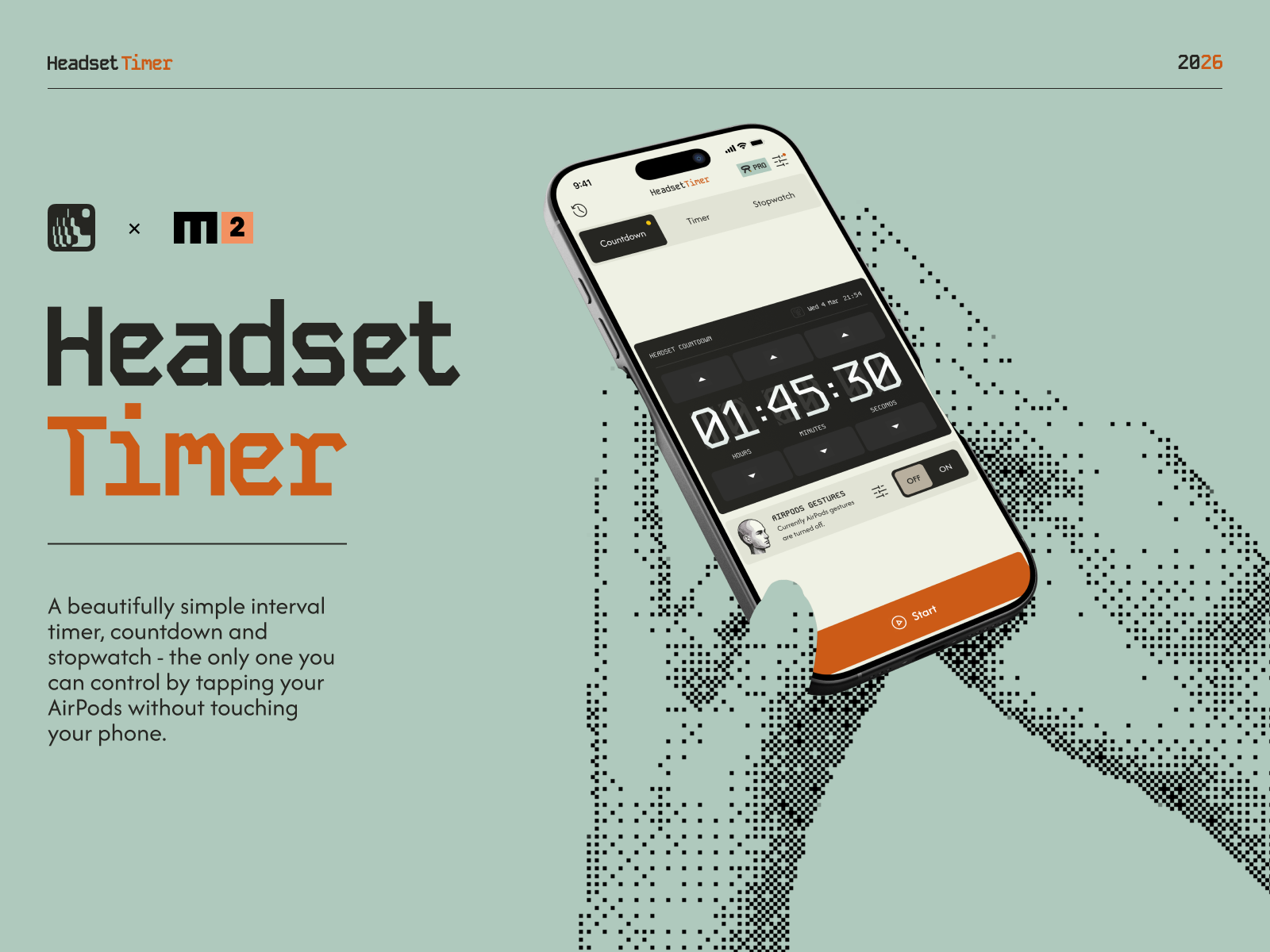
Headset Timer – A Screen-Free Timer Controlled with AirPods

34 votes
|
Mobile App
 Memory Squared
Public voting is currently closed.
Overview
Project Details
Category
Customer
Submitted by
Timeframe
Tech Stack
Services
Demo Link
Team
Link to case study
Description
At Memory Squared, we believe the most interesting digital products emerge when design and engineering work creatively together.
Headset Timer was created as one of our internal creative engineering side projects - a playground where we could freely explore the areas we enjoy most: hands-on software engineering, wearable technologies, human-device interaction and distinctive product design.
The project started with a simple observation. If you don't own a dedicated fitness watch - or use one of the increasingly popular screen-free wearables - controlling a workout timer almost always means reaching for your phone. Whether running, training at the gym or following an interval workout, users have to interrupt their activity simply to start, pause or reset a timer. More often than not, that brief interaction also brings unnecessary distractions: notifications, messages or social media.
Exploring AirPods as an Interface
Rather than building another timer, we set ourselves a broader challenge: could compatible AirPods become a natural extension of the user interface?
Apple does not expose an API that allows third-party applications to react to AirPods' built-in controls beyond their intended media functions. We asked a question: could motion data itself become the interface?
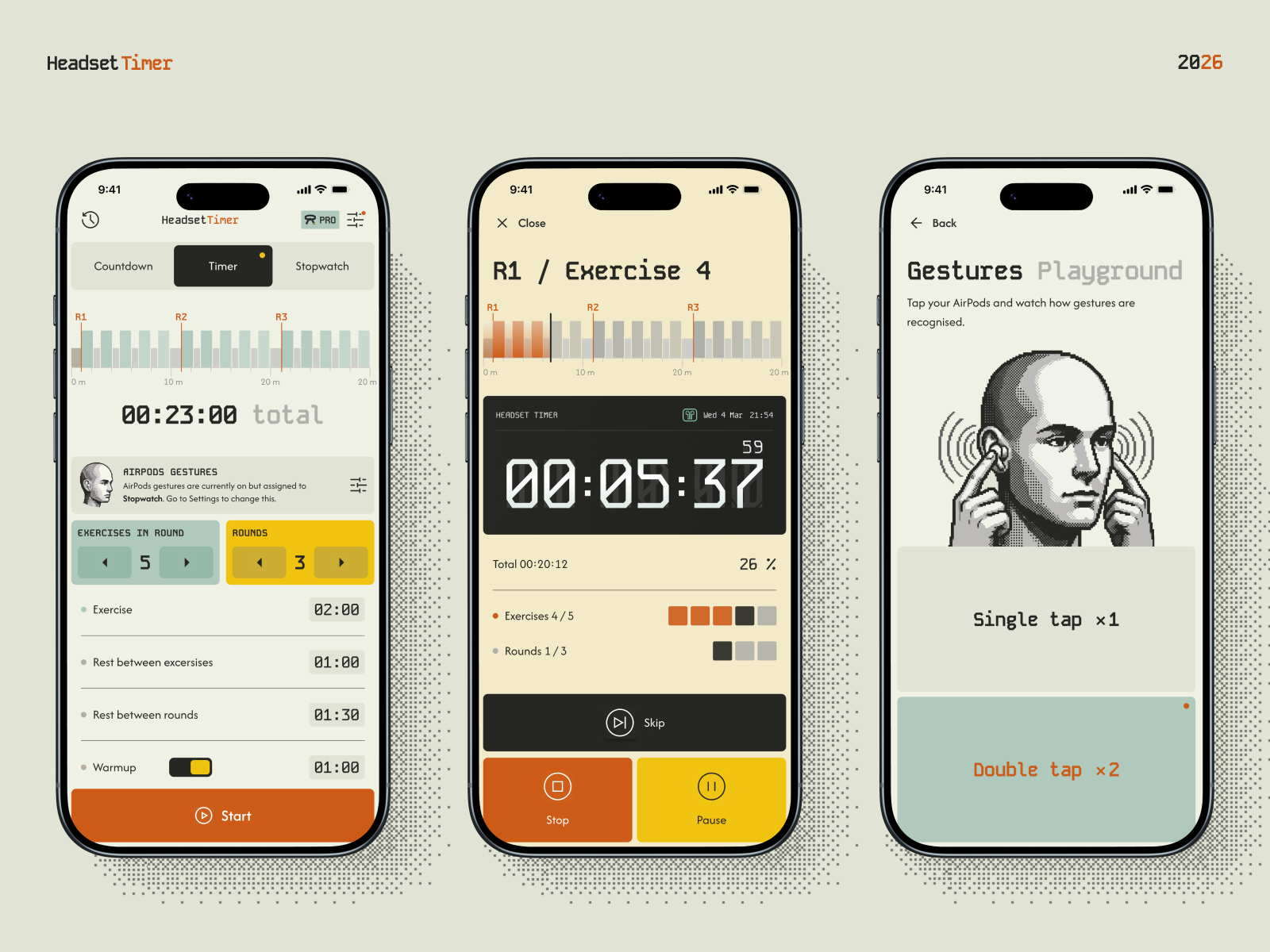
Using Apple's Motion Tracking API available on compatible AirPods, we developed a custom machine learning-based recognition model capable of distinguishing intentional tap gestures from natural head movement.
The result is an interaction that feels almost invisible. Users simply tap their AirPods to control the timer, without taking out their phone or even looking at a screen.
Visual Identity
The engineering approach was matched with an equally distinctive visual direction.
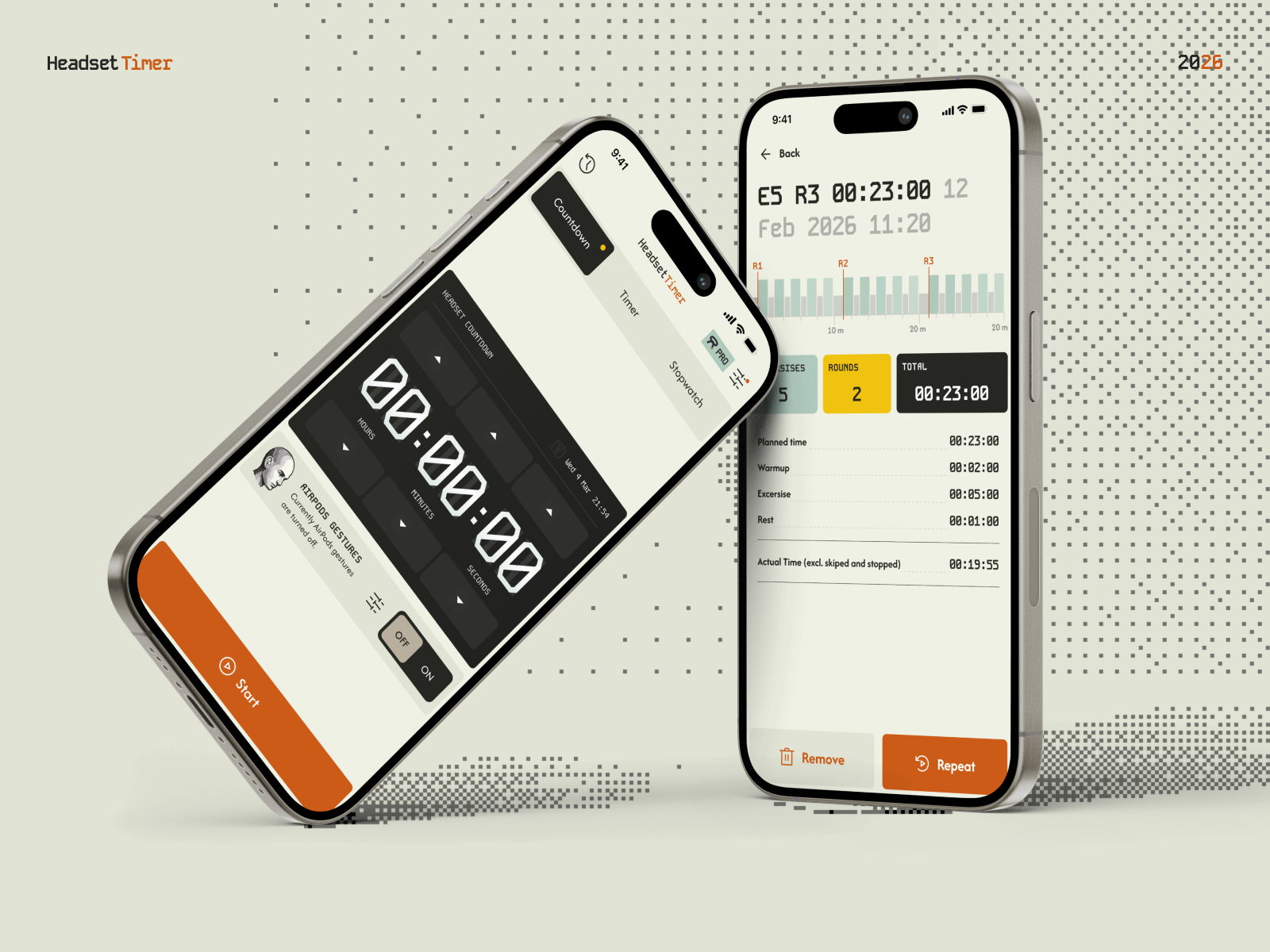
Inspired by industrial electronics, retro arcade hardware and beautifully crafted consumer products, the interface combines bold typography, playful details and a deliberately minimal layout.
The goal was never to create another generic fitness application, but a product with a recognisable personality that reflects the creativity behind its engineering.
A Playground for Innovation
Unlike client work, Headset Timer gave us complete freedom to experiment.
Every product decision - from branding and interaction design to the underlying gesture recognition model - was driven by curiosity rather than a specification document.
The project became an opportunity to prototype unconventional ideas, validate engineering assumptions and explore interaction models that may later find their way into commercial products.
This is precisely why we invest time in side projects. They allow us to learn by building, explore technologies beyond client requirements and continuously expand our design and engineering capabilities.
Creativity Through Constraints
One aspect of the project is particularly meaningful to us.
Using data and APIs that were never intended to become a user interface feels almost like the kind of engineering "hack" that fuelled many of the digital innovations of the past.
We believe many innovations in digital design have historically come from exactly this mindset: looking beyond the obvious use and boundaries of particular technology.
Headset Timer is our small contribution to that tradition.