Overview
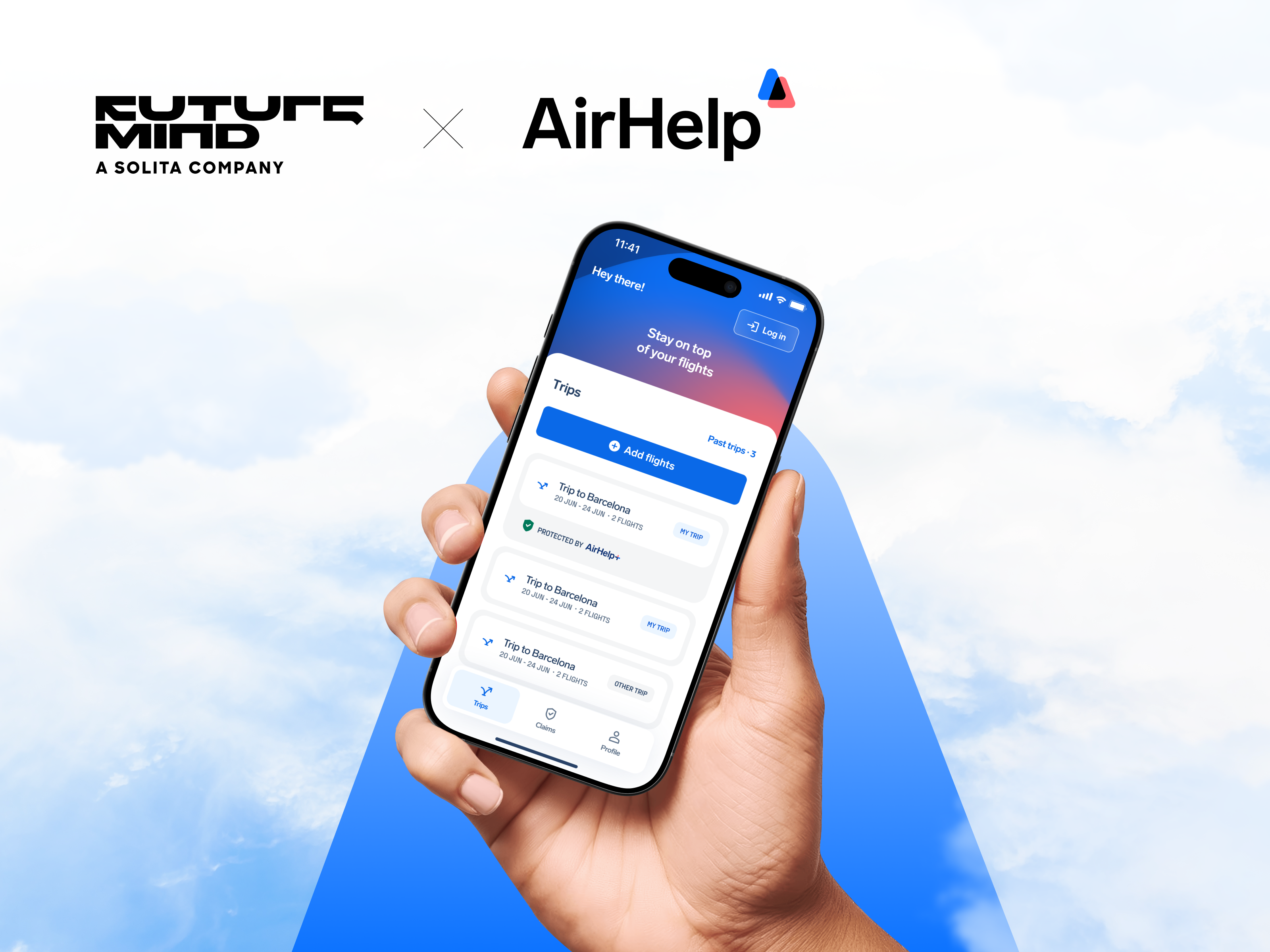
We supported AirHelp in building a mobile app powered by AI and automation - helping travelers quickly check compensation eligibility, track flights, and submit claims in just a few taps.
Project Details
Category
Customer
Submitted by
Timeframe
Tech Stack
Services
Demo Link
Team
Link to case study
Description
<p>
AirHelp, a global leader in flight compensation and passenger rights, partnered with Future Mind to bring their vision of seamless, traveler-centric assistance into a mobile app. The goal was clear: make complex legal processes, like regulations and claim submissions, intuitive and effortless.
</p>
<br>
<p>
The key challenge was translating complex legal and operational flows into a mobile experience that feels effortless for users. We began with deep immersion in aviation law and compensation workflows, then mapped user journeys that transform legal complexity into clear, mobile-first experiences. Developed as a React Native app for speed and consistency, it also features native iOS technologies like Live Activities for proactive delay alerts.
</p>
<br>
<p>
The app’s standout capabilities include automatic flight detection through AI-powered email and calendar scanning - unearthing eligible past trips for compensation with no user effort required. From there, users get instant claim estimates and guided submission flows. It also offers free, premium-grade disruption data (like live aircraft tracking), offline-first trip management that handles multi-leg itineraries accurately, and engaging social features like family trip sharing and Instagram-ready boarding pass visuals.
</p>
<br>
<p>
As a result, the AirHelp app isn’t just a claims tool - it’s a proactive, intelligent travel companion. Since launch, it’s elevated AirHelp’s role from legal advocate to daily travel ally by making passenger rights tangible, accessible, and valuable to millions of users.
</p>
Why Us
This project bridges legal-tech, travel, and AI in a way that directly improves people’s lives. The AirHelp app shows how innovation can remove friction from traditionally complex services and do so at scale.