Spreadshirt - AI-Powered Print Design and Personalisation App

41 votes
|
Mobile App
 Memory Squared
Public voting is currently closed.
Overview
Project Details
Category
Customer
Submitted by
Timeframe
Tech Stack
Services
Team
Link to case study
Description
Spread Group is an international fashion and lifestyle company specialising in on-demand production and printing across a portfolio of apparel and merchandise brands.
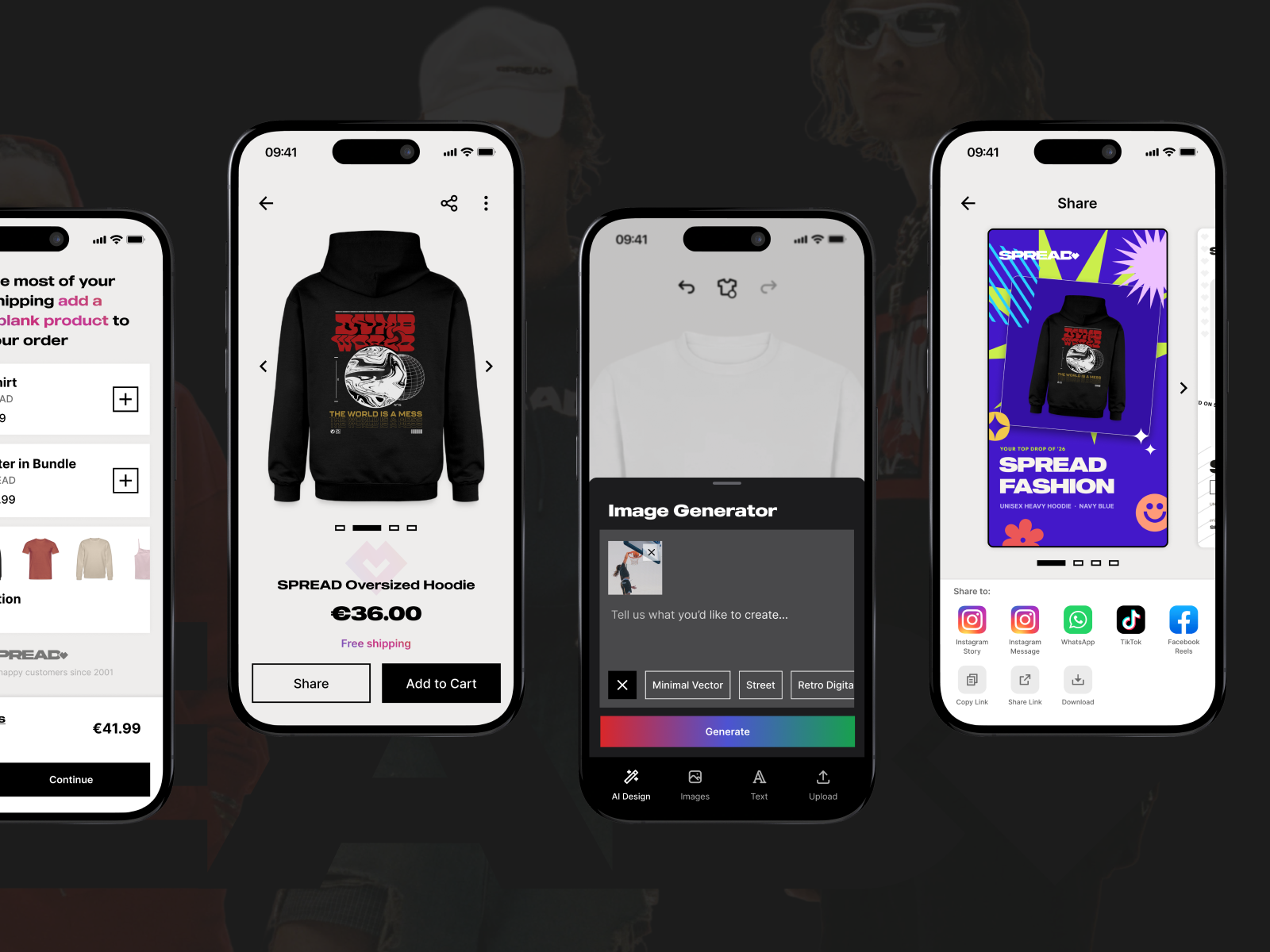
The cooperation began with a focused research assignment. Spread Group wanted to understand whether generative AI could meaningfully improve the creation of visual designs and print-ready assets, particularly within a native mobile environment.
At the time, the company already operated a mature and commercially successful web ecosystem, including a browser-based product editor and AI-assisted design capabilities. The main product challenge was therefore not simply to transfer existing functionality onto a smaller screen. It was to determine what role mobile should play within a complex, established commerce and production environment.
Research and validation
The initial phase combined product discovery with technical research into generative AI models and image-processing infrastructure.
We assessed potential solutions in terms of:
- Output quality and consistency
- Operational cost
- Scalability
- Generation time and performance
- Integration complexity
- Reliability under realistic usage conditions
- Potential impact on user experience and conversion
We therefore designed and tested multiple generation and processing pipelines, including different prompt structures, preprocessing methods and post-processing flows. These experiments helped establish which capabilities were sufficiently stable and controllable to become part of a real product.
From research to MVP
The engagement gradually evolved from research into product development.
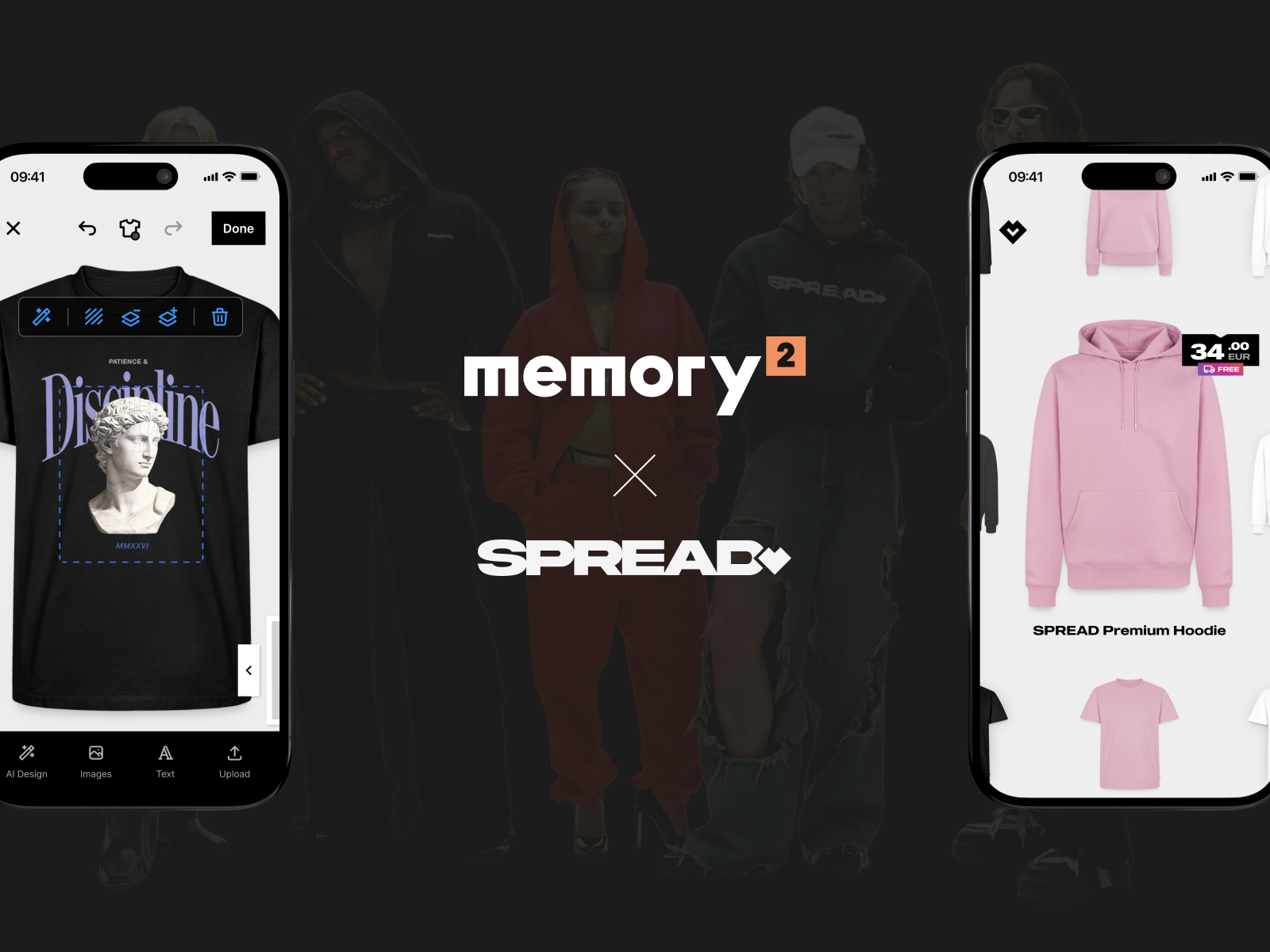
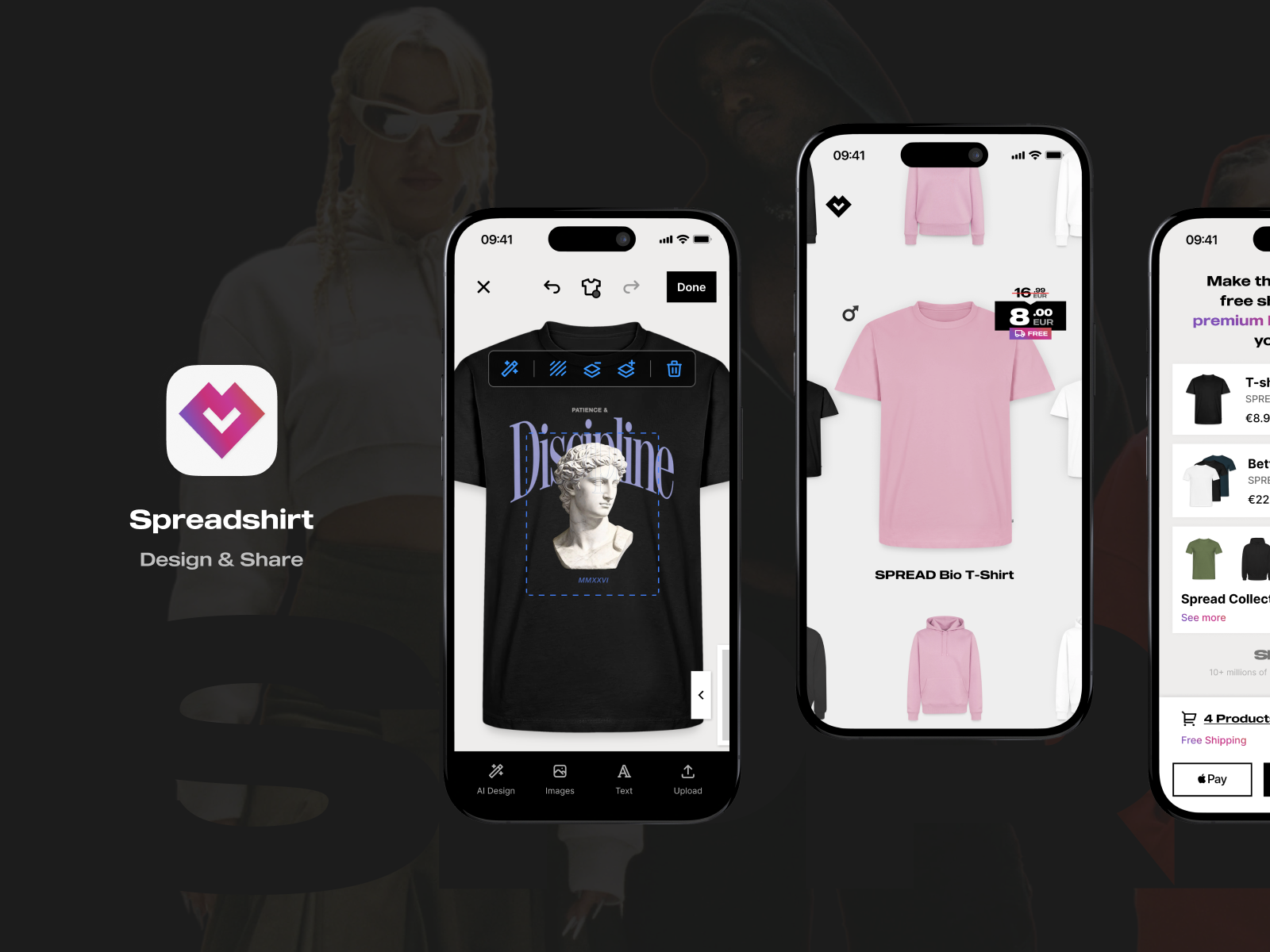
Together with Spread Group, we defined a focused mobile MVP centred around an AI-assisted editor. The objective was to allow users to generate and personalise designs without exposing the technical complexity.
Building within an enterprise ecosystem
The application could not operate as an independent product. It had to connect with Spread Group’s existing:
- Product catalogue
- Authentication and account systems
- Commerce APIs
- Rendering infrastructure
- Production workflows
- Product configuration logic
- Logistics systems
The UX challenge was equally significant. We needed to create a modern, mobile-first product while maintaining continuity with a design language and commerce ecosystem developed over many years.
The build-versus-reuse decision
One of the most important decisions concerned the design editor.
Building a complete mobile editor from scratch - including AI capabilities, product configuration and integration with production systems - would have required substantial time and investment. It would also have created a rigid development cycle in a rapidly changing AI market.
Spread Group already used an editor within its web environment. Although the existing solution was not originally designed for this mobile use case and required significant adaptation, it provided a proven technical foundation.
Working with Spread Group, we chose to adapt this core instead of replacing it. The work focused on:
- Redesigning interaction patterns for mobile
- Simplifying complex editing flows
- Creating a cohesive UX around the existing engine
- Extending the native SDK where necessary
- Connecting the editor to Spread Group’s wider infrastructure
Release and continued development
The first production version was released in February 2026.
Following the launch, the project moved into continuous development. The application has evolved beyond a mobile extension of the existing website and is becoming a standalone way to enter and use the Spread Group ecosystem.
Ongoing work includes:
- Usability and onboarding improvements
- Deeper commerce and ordering integration
- Authentication and account flows
- Product configuration
- New AI-assisted capabilities
- Sharing and collaboration
- Template-based creation
- Richer product presentation formats
It also shows that meaningful innovation does not always require rebuilding every component. In this case, the strongest solution came from combining existing technology, custom mobile development and new AI workflows into one coherent product.